

python中使用正则表达式的步骤:
1.导入re模块:import re
2.初始化一个Regex对象:re.compile()
3.刚刚创建的Regex对象调用search方法进行匹配,返回要给March对象
4.刚刚的March对象调用group方法,展示匹配到的字符串
下面例子的知识点:
对正则表达式分组用:(),正则里的分组计数从1开始,不是从0,切记~~
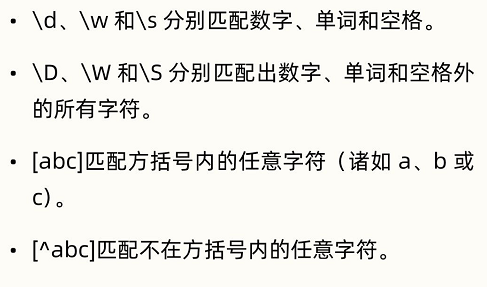
\d表示一个数字
regex_obj = re.compile(r'(\d\d\d)-(\d\d\d)-(\d\d\d\d)')
match_obj = regex_obj.search('我司电话:035-411-1234')
result1 = match_obj.group(1)
result2 = match_obj.group(2)
result3 = match_obj.group(3)
print(result1)
print(result2)
print(result3)
result4 = match_obj.group()
print(result4)
result5 = match_obj.groups()
print(result5)
执行结果:
035
411
1234
035-411-1234
('035', '411', '1234')
补充知识点:\w表示一个单词,\s表示一个空格
regex_obj = re.compile(r'(\d\w\d)-(\d\d\d)-(\d\d\d\d)')
match_obj = regex_obj.search('我司电话:0a5-411-1234')
result = match_obj.group(1)
print(result)
regex_obj = re.compile(r'(\d\w\d)-(\d\d\d)-(\d\d\d\d)')
match_obj = regex_obj.search('我司电话:0哈5-411-1234')
result = match_obj.group(1)
print(result)
regex_obj = re.compile(r'(\d\s\d)-(\d\d\d)-(\d\d\d\d)')
match_obj = regex_obj.search('我司电话:0 5-411-1234')
result = match_obj.group(1)
print(result)
执行结果:
0a5
0哈5
0 5
| 或:
regex_obj = re.compile(r'200|ok|successfully')
match_obj1 = regex_obj.search('vom get request and stored successfully')
result1 = match_obj1.group()
print(result1)
match_obj2 = regex_obj.search('vom get request,response 200 ok')
result2 = match_obj2.group()
print(result2)
match_obj3 = regex_obj.search('vom get request,response ok 200')
result3 = match_obj3.group()
print(result3)
执行结果:
successfully
200
ok
注意:如果search返回的March对象只有一个结果值的话,不能用groups,只能用group
regex_obj = re.compile(r'200|ok|successfully')
match_obj1 = regex_obj.search('vom get request and stored successfully')
result2 = match_obj1.groups()
print(result2)
result1 = match_obj1.group()
print(result1)
执行结果:
()
successfully
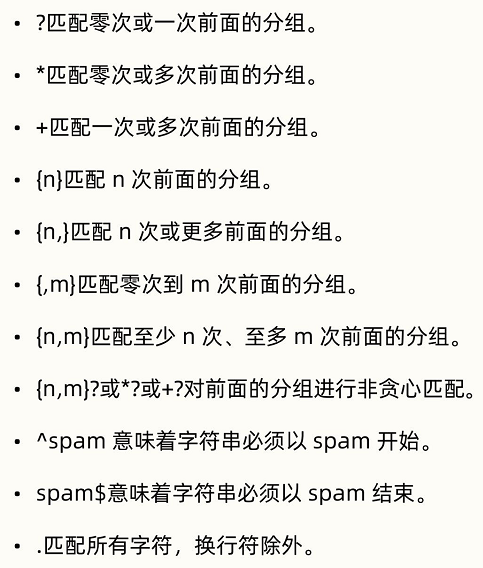
? :可选匹配项
+ :1次 或 n次 匹配
* :*前面的字符或者字符串匹配 0次、n次
注意:*前面必须要有内容
regex_obj = re.compile(r'(haha)*,welcome to vom_admin system') 指haha这个字符串匹配0次或者多次
regex_obj = re.compile(r'(ha*),welcome to vom_admin system') 指ha这个字符串匹配0次或者多次
. : 通配符,匹配任意一个字符
所以常常用的组合是:.*
regex_obj = re.compile(r'(.*),welcome to vom_admin system')
match_obj1 = regex_obj.search('Peter,welcome to vom_admin system')
name = match_obj1.group(1)
print(name)
执行结果:
Peter
{} : 匹配特定的次数
里面只写一个数字:匹配等于数字的次数
里面写{3,5}这样两个数字的,匹配3次 或 4次 或 5次,按贪心匹配法,能满足5次的就输出5次的,没有5次就4次,4次也没有才是3次
regex_obj = re.compile(r'((ha){3}),this is very funny')
match_obj1 = regex_obj.search('hahahaha,this is very funny')
print("{3}结果",match_obj1.group(1))
regex_obj = re.compile(r'((ha){3,5}),this is very funny')
match_obj1 = regex_obj.search('hahahaha,this is very funny')
print("{3,5}结果",match_obj1.group(1))
执行结果:
{3}结果 hahaha
{3,5}结果 hahahaha
findall():返回所有匹配到的字串的列表
regex_obj = re.compile(r'\d\d\d')
match_obj = regex_obj.findall('我是101班的,小李是103班的')
print(match_obj)
regex_obj = re.compile(r'(\d\d\d)-(\d\d\d)-(\d\d\d\d)')
match_obj = regex_obj.findall('我家电话是123-123-1234,我公司电话是890-890-7890')
print(match_obj)
打印结果:
['101', '103']
[('123', '123', '1234'), ('890', '890', '7890')]
[]:创建自己的字符集:
[abc]:包括[]内的字符
[^abc]:不包括[]内的所有字符
也可以使用:[a-zA-Z0-9]这样简写
regex_obj = re.compile(r'[!@#$%^&*()]')
name = input("请输入昵称,不含特殊字符:")
match_obj = regex_obj.search(name)
if match_obj:
  print("昵称输入不合法,包含了特殊字符:", match_obj.group())
else:
  print("昵称有效")
执行结果:
请输入昵称,不含特殊字符:*h
昵称输入不合法,包含了特殊字符: *
^:开头
$:结尾
regex_obj = re.compile(r'(^[A-Z])(.*)')
name = input("请输入昵称,开头必须大写字母:")
match_obj = regex_obj.search(name)
print(match_obj.group())
执行结果:
请输入昵称,开头必须大写字母:A1234
A1234
sub():第一个参数为要替换成的,第二个参数传被替换的,返回替换成功后的字符串
regex_obj = re.compile(r'[!@#$%^&*()]')
match_obj = regex_obj.sub('嘿','haha,$%^,hahah')
print(match_obj)
执行结果:
haha,嘿嘿嘿,hahah
补充一下正则表达式的表,正则太复杂了,要常看常用才能熟练
以上就是本文的全部内容,希望对大家的学习有所帮助,也希望大家多多支持脚本之家。


