

很难找到关于如何使用Python使用DeepMoji的教程。我已经尝试了几次,后来又出现了几次错误,于是决定使用替代版本:torchMoji。
TorchMoji是DeepMoji的pyTorch实现,可以在这里找到:https://github.com/huggingface/torchMoji
事实上,我还没有找到一个关于如何将文本转换为表情符号的教程。如果你也没找到,那么本文就是一个了。
安装
这些代码并不完全是我的写的,源代码可以在这个链接上找到。
pip3 install torch==1.0.1 -f https://download.pytorch.org/whl/cpu/stable
git clone https://github.com/huggingface/torchMoji
import os
os.chdir('torchMoji')
pip3 install -e .
#if you restart the package, the notebook risks to crash on a loop
#I did not restart and worked fine
该代码将下载约600 MB的数据用于训练人工智能。我一直在用谷歌Colab。然而,我注意到,当程序要求您重新启动笔记本进行所需的更改时,它开始在循环中崩溃并且无法补救。如果你使用的是jupyter notebook或者colab记事本不要重新,不管它的重启要求就可以了。
python3 scripts/download_weights.py
这个脚本应该下载需要微调神经网络模型。询问时,按“是”确认。
设置转换功能函数
使用以下函数,可以输入文进行转换,该函数将输出最可能的n个表情符号(n将被指定)。
import numpy as np
import emoji, json
from torchmoji.global_variables import PRETRAINED_PATH, VOCAB_PATH
from torchmoji.sentence_tokenizer import SentenceTokenizer
from torchmoji.model_def import torchmoji_emojis

EMOJIS = ":joy: :unamused: :weary: :sob: :heart_eyes: :pensive: :ok_hand: :blush: :heart: :smirk: :grin: :notes: :flushed: :100: :sleeping: :relieved: :relaxed: :raised_hands: :two_hearts: :expressionless: :sweat_smile: :pray: :confused: :kissing_heart: :heartbeat: :neutral_face: :information_desk_person: :disappointed: :see_no_evil: :tired_face: :v: :sunglasses: :rage: :thumbsup: :cry: :sleepy: :yum: :triumph: :hand: :mask: :clap: :eyes: :gun: :persevere: :smiling_imp: :sweat: :broken_heart: :yellow_heart: :musical_note: :speak_no_evil: :wink: :skull: :confounded: :smile: :stuck_out_tongue_winking_eye: :angry: :no_good: :muscle: :facepunch: :purple_heart: :sparkling_heart: :blue_heart: :grimacing: :sparkles:".split(' ')
model = torchmoji_emojis(PRETRAINED_PATH)
with open(VOCAB_PATH, 'r') as f:
 vocabulary = json.load(f)
st = SentenceTokenizer(vocabulary, 30)def deepmojify(sentence,top_n =5):
 def top_elements(array, k):
 ind = np.argpartition(array, -k)[-k:]
 return ind[np.argsort(array[ind])][::-1]tokenized, _, _ = st.tokenize_sentences([sentence])
 prob = model(tokenized)[0]
 emoji_ids = top_elements(prob, top_n)
 emojis = map(lambda x: EMOJIS[x], emoji_ids)
 return emoji.emojize(f"{sentence} {' '.join(emojis)}", use_aliases=True)
文本实验
text = ['I hate coding AI']for _ in text:
 print(deepmojify(_, top_n = 3))
输出

如您所见,这里给出的是个列表,所以可以添加所需的字符串数。
原始神经网络
如果你不知道如何编码,你只想试一试,你可以使用DeepMoji的网站:https://deepmoji.mit.edu/
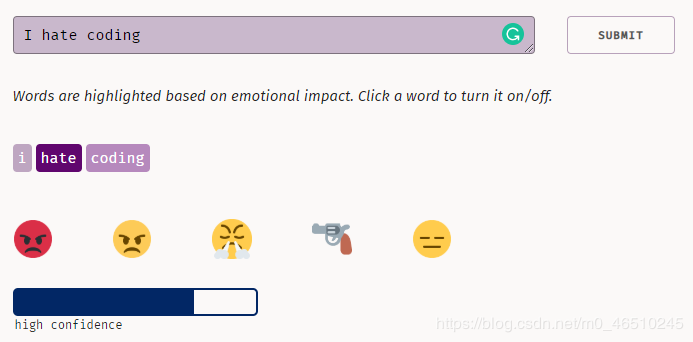
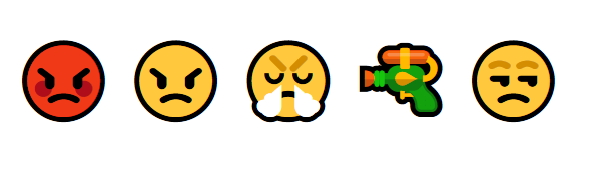
源代码应该完全相同,事实上,如果我输入5个表情符号而不是3个,这就是我代码中的结果:
输入列表而不是一句话
在进行情绪分析时,我通常会在Pandas上存储tweets或评论的数据库,我将使用以下代码,将字符串列表转换为Pandas数据帧,其中包含指定数量的emojis。
import pandas as pddef emoji_dataset(list1, n_emoji=3):
 emoji_list = [[x] for x in list1]for _ in range(len(list1)):
 for n_emo in range(1, n_emoji+1):
  emoji_list[_].append(deepmojify(list1[_], top_n = n_emoji)[2*-n_emo+1])emoji_list = pd.DataFrame(emoji_list)
 return emoji_listlist1 = ['Stay safe from the virus', 'Push until you break!', 'If it does not challenge you, it will not change you']
我想估计一下这个字符串列表中最有可能出现的5种表情:
emoji_dataset(list1, 5)
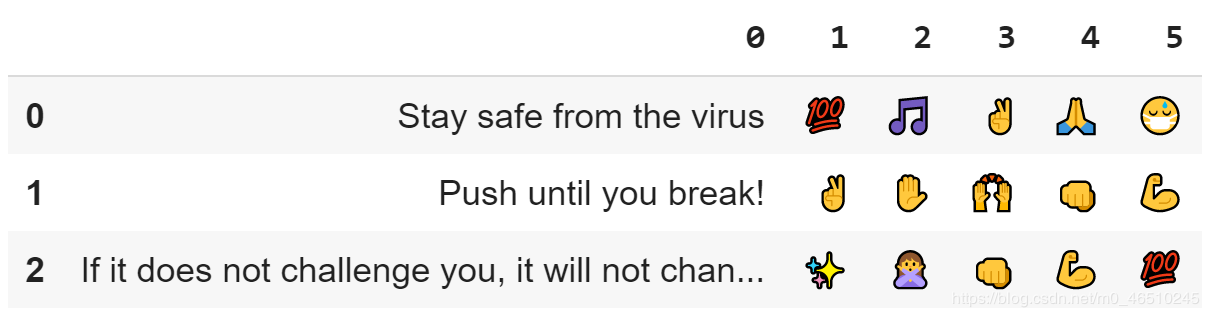
就是这么简单
作者:Michelangiolo Mazzeschi
deephub翻译组


