

最近一直把collection和association弄混,所以为了增强自己的记忆,就撸一个关系出来算是总结罢了
1. 关联-association
2. 集合-collection
比如同时有User.java和Card.java两个类
User.java如下:
public class User{

private Card card_one;

private List<Card> card_many;

}
在映射card_one属性时用association标签, 映射card_many时用collection标签.
所以association是用于一对一和多对一,而collection是用于一对多的关系
下面就用一些例子解释下吧
association-一对一
人和身份证的关系
下面是pojo
public class Card implements Serializable{
 private Integer id;
 private String code;
//省略set和get方法.
}
public class Person implements Serializable{
 private Integer id;
 private String name;
 private String sex;
 private Integer age;
 //人和身份证是一对一的关系
 private Card card;
//省略set/get方法.
}
下面是mapper和实现的接口
package com.glj.mapper;

import com.glj.poji.Card;

public interface CardMapper {
 Card selectCardById(Integer id);
}
<?xml version="1.0" encoding="UTF-8"?>
<!DOCTYPE mapper
  PUBLIC "-//mybatis.org//DTD Mapper 3.0//EN"
  "http://mybatis.org/dtd/mybatis-3-mapper.dtd">
<mapper namespace="com.glj.mapper.CardMapper">
 <select id="selectCardById" parameterType="int" resultType="com.glj.poji.Card">
 select * from tb_card where id = #{id}
 </select>
</mapper>
package com.glj.mapper;

import com.glj.poji.Person;

public interface PersonMapper {
 Person selectPersonById(Integer id);
}
<?xml version="1.0" encoding="UTF-8"?>
<!DOCTYPE mapper
  PUBLIC "-//mybatis.org//DTD Mapper 3.0//EN"
  "http://mybatis.org/dtd/mybatis-3-mapper.dtd">
<mapper namespace="com.glj.mapper.PersonMapper">
 <resultMap type="com.glj.poji.Person" id="personMapper">
 <id property="id" column="id"/>
 <result property="name" column="name"/>
 <result property="sex" column="sex"/>
 <result property="age" column="age"/>
 <association property="card" column="card_id"
  select="com.glj.mapper.CardMapper.selectCardById"
  javaType="com.glj.poji.Card">
 </association>
 </resultMap>
 <select id="selectPersonById" parameterType="int" resultMap="personMapper">
 select * from tb_person where id = #{id}
 </select>
</mapper>
PersonMapper.xml 还使用association的分步查询。
同理多对一,也是一样
只要那个pojo出现private Card card_one;
即使用association
collection 一对多和association的多对一关系
学生和班级的一对多的例子
pojo类
package com.glj.pojo;

import java.io.Serializable;
import java.util.List;

public class Clazz implements Serializable{
 private Integer id;
 private String code;
 private String name;
    //班级与学生是一对多的关系
 private List<Student> students;
//省略set/get方法
}
package com.glj.pojo;

import java.io.Serializable;

public class Student implements Serializable {
 private Integer id;
 private String name;
 private String sex;
 private Integer age;
    //学生与班级是多对一的关系
 private Clazz clazz;
//省略set/get方法
}
<?xml version="1.0" encoding="UTF-8"?>
<!DOCTYPE mapper
  PUBLIC "-//mybatis.org//DTD Mapper 3.0//EN"
  "http://mybatis.org/dtd/mybatis-3-mapper.dtd">
<mapper namespace="com.glj.mapper.ClazzMapper">
 <select id="selectClazzById" parameterType="int" resultMap="clazzResultMap">
 select * from tb_clazz where id = #{id}
 </select>
 <resultMap type="com.glj.pojo.Clazz" id="clazzResultMap">
 <id property="id" column="id"/>
 <result property="code" column="code"/>
 <result property="name" column="name"/>
 <!-- property: 指的是集合属性的值, ofType:指的是集合中元素的类型 -->
 <collection property="students" ofType="com.glj.pojo.Student"
 column="id" javaType="ArrayList"
 fetchType="lazy" select="com.glj.mapper.StudentMapper.selectStudentByClazzId">
  <id property="id" column="id"/>
  <result property="name" column="name"/>
  <result property="sex" column="sex"/>
  <result property="age" column="age"/>
 </collection>
 </resultMap>
</mapper>
package com.glj.mapper;

import com.glj.pojo.Clazz;

public interface ClazzMapper {
 Clazz selectClazzById(Integer id);
}
ClazzMapper使用到了集合-collection 即为一对多,一个班级面对多个学生
<?xml version="1.0" encoding="UTF-8"?>
<!DOCTYPE mapper
  PUBLIC "-//mybatis.org//DTD Mapper 3.0//EN"
  "http://mybatis.org/dtd/mybatis-3-mapper.dtd">
<mapper namespace="com.glj.mapper.StudentMapper">
 <select id="selectStudentById" parameterType="int" resultMap="studentResultMap">
 select * from tb_clazz c,tb_student s where c.id = s.id and s.id = #{id}
 </select>
 <select id="selectStudentByClazzId" parameterType="int" resultMap="studentResultMap">
 select * from tb_student where clazz_id = #{id}
 </select>
 <resultMap type="com.glj.pojo.Student" id="studentResultMap">
 <id property="id" column="id"/>
 <result property="name" column="name"/>
 <result property="sex" column="sex"/>
 <result property="age" column="age"/>
 <association property="clazz" javaType="com.glj.pojo.Clazz">
  <id property="id" column="id"/>
  <result property="code" column="code"/>
  <result property="name" column="name"/>
 </association>
 </resultMap>
</mapper>
package com.glj.mapper;

import com.glj.pojo.Student;

public interface StudentMapper {
 Student selectStudentById(Integer id);
}
StudentMapper则是与班级为多对一关系,所以使用了关联-association
嗯,希望我以后又不记得二者的关系时,能感谢现在总结的自己
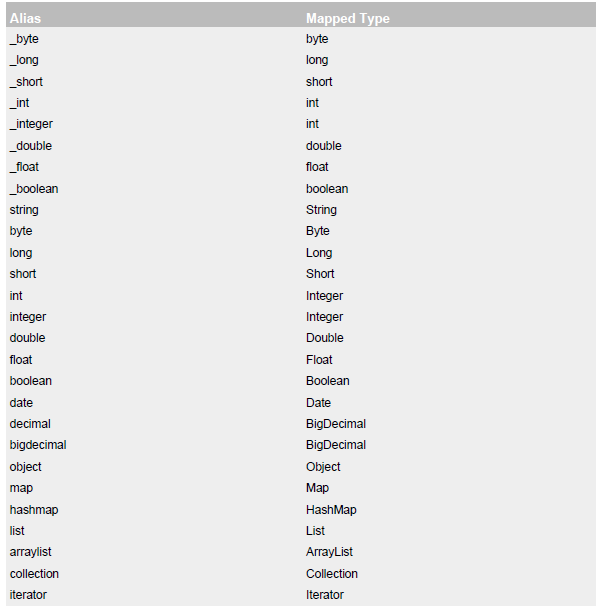
附上一张mybatis的类型别名图
以上就是本文的全部内容,希望对大家的学习有所帮助,也希望大家多多支持脚本之家。


