

1.概念
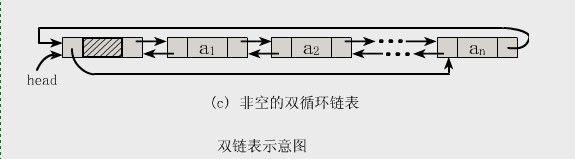
双向链表也叫双链表,是链表的一种,它的每个数据结点中都有两个指针,分别指向直接后继和直接前驱。所以,从双向链表中的任意一个结点开始,都可以很方便地访问它的前驱结点和后继结点。一般我们都构造双向循环链表。
结构图如下所示:

2.基本操作实例
DoubleList.cpp
#include "stdafx.h"
#include "DoubleList.h"
#include <stdio.h>
#include <malloc.h>
#include <stdlib.h>
DoubleList::DoubleList()
{
    pDoubleListNode pDouList = NULL;
    // 创建双链表
    CreateDouList(pDouList);
    PrintDouList(pDouList);
    // 打印逆序链表
    PrintDouReverseList(pDouList);
    // 节点后插入节点
    InsertNodeAfter(pDouList);
    PrintDouList(pDouList);
    // 节点前插入节点
    InsertNodeBefore(pDouList);
    PrintDouList(pDouList);
    // 删除节点
    DeleteNode(pDouList);
    PrintDouList(pDouList);
    // 删除链表
    DeleteDouList(pDouList);
    PrintDouList(pDouList);
    system("PAUSE");
}
DoubleList::~DoubleList()
{
}
//创建双向链表
void DoubleList::CreateDouList(pDoubleListNode &head)
{
  char x;     // 定义成char型是用于输入'q'时可以退出,其实定义成int也能退出
  pDoubleListNode p, s;
  head = (pDoubleListNode)malloc(sizeof(DoubleListNode));
  head->next = NULL;
  head->prior = NULL;    // 构造头结点p
  p = head;
  printf("\n输入双向链表的元素,每输入一个元素后按回车,输入q表示结束.\n");
  fflush(stdin);  //清空输入缓冲区
  x = getchar();
  while (x != 'q')
  {
    s = (pDoubleListNode)malloc(sizeof(DoubleListNode));
    s->data = x - '0'; // 得到的是输入字符的ASCII码,减去30H就变成想要的数字
    s->next = NULL;
    s->prior = p;
    p->next = s;
    p = s;
    fflush(stdin);
    x = getchar();
  }
  if (x == 'q')
  {
    printf("双向链表构造完毕!\n");
  }
}
//打印双向链表
void DoubleList::PrintDouList(pDoubleListNode &head)
{
  pDoubleListNode p;
  printf("\n打印出双向链表数据为:\n");
  if (!IsDouListEmpty(head))
  {
    p = head->next;
    while (p)
    {
      printf("%d\n", p->data);
      p = p->next;
    }
  }
}
//逆序打印双向链表
void DoubleList::PrintDouReverseList(pDoubleListNode &head)
{
  pDoubleListNode p;
  printf("\n打印出逆序双向链表数据为:\n");
  if (!IsDouListEmpty(head))
  {
    p = head->next;
    while (p->next)
    {
      p = p->next;
    }
    while (p->prior)
    {
      printf("%d \n", p->data);
      p = p->prior;
    }
  }
}
//求链表长度
int DoubleList::GetDouListLength(pDoubleListNode &head)
{
  int length = 0;
  if (head == NULL)
  {
    printf("链表不存在,请先初始化!\n");
  }
  else
  {
    pDoubleListNode p = head->next;
    while (p)
    {
      length++;
      p = p->next;
    }
  }
  return length;
}
//判断链表是否为空
bool DoubleList::IsDouListEmpty(pDoubleListNode &head)
{
  if (head == NULL)
  {
    printf("链表不存在,请先初始化!\n");
    return true;
  }
  else if (head->next == NULL)
  {
    printf("链表为空!\n");
    return true;
  }

  return false;
}
//把双向链表置空
void DoubleList::ClearDouList(pDoubleListNode &head)
{
  if (head == NULL)
  {
    printf("链表不存在,请先初始化!\n");
  }
  else
  {
    pDoubleListNode p, q;
    p = q = head->next;  //是p、q指向第一个元素
    head->next = NULL;
    while (p)     //逐个释放元素所占内存
    {
      p = p->next;
      free(q);
      q = p;
    }
  }
}
// 删除双向链表
void DoubleList::DeleteDouList(pDoubleListNode &head)
{
  printf("\n删除双向链表\n");
  ClearDouList(head);
  free(head);
  head = NULL;
}
// 在双向链表中第i个位置后面插入元素
void DoubleList::InsertNodeAfter(pDoubleListNode &head)
{
  int data, pos;
  pDoubleListNode p, s;
  p = head;
  int i = 0;
  printf("\n在双向链表中第i个位置后面插入元素\n");
  printf("请输入要插入的元素和位置:\n");
  scanf_s("%d%d", &data, &pos, 100);
  if (head == NULL)
  {
    printf("链表不存在,请先初始化!\n");
  }
  else if (head->next == NULL)
  {
    printf("链表为空,插入第一个元素!\n");
    s = (pDoubleListNode)malloc(sizeof(DoubleListNode));
    s->data = data;
    s->prior = NULL;
    s->next = NULL;
    head->next = s;    // 将新结点插入head后
  }
  else if (pos<1 || pos>GetDouListLength(head) + 1)
  {
    printf("插入位置错误!\n");
  }
  else
  {
    while (i < pos)
    {
      p = p->next;
      i++;
    }
    if (i == GetDouListLength(head))   //如果在最后一个元素后面插入data
    {
      s = (pDoubleListNode)malloc(sizeof(DoubleListNode));
      s->data = data;
      s->next = NULL;
      s->prior = p;
      p->next = s;
    }
    else
    {
      s = (pDoubleListNode)malloc(sizeof(DoubleListNode));
      s->data = data;
      s->next = p->next;
      p->next->prior = s;
      p->next = s;
      s->prior = p;
    }
  }
}
// 在双向链表中第i个位置前面插入元素
void DoubleList::InsertNodeBefore(pDoubleListNode &head)
{
  int data, pos;
  pDoubleListNode p, s;
  p = head;
  int i = 0;
  printf("\n在双向链表中第i个位置前面插入元素\n");
  printf("请输入要插入的元素和位置:\n");
  scanf_s("%d%d", &data, &pos, 100);
  if (head == NULL)
  {
    printf("链表不存在,请先初始化!\n");
  }
  else if (head->next == NULL)
  {
    printf("链表为空,插入第一个元素!\n");
    s = (pDoubleListNode)malloc(sizeof(DoubleListNode));
    s->data = data;
    s->prior = NULL;
    s->next = NULL;
    head->next = s;    // 将新结点插入head后
  }
  else if (pos<1 || pos>GetDouListLength(head) + 1)
  {
    printf("插入位置错误!\n");
  }
  else
  {
    while (i < pos)
    {
      p = p->next;
      i++;
    }
    if (i == 1)   // 如果在第一个元素前面插入data
    {
      s = (pDoubleListNode)malloc(sizeof(DoubleListNode));
      s->data = data;
      head->next = s;    // 将新结点插入head后
      s->prior = head;    // 新结点的前结点指向头结点
      s->next = p;            // 新结点的后结点指向原head的后结点
      p->prior = s ;          // 原第一个结点的前结点指向新结点
    }
    else
    {
      s = (pDoubleListNode)malloc(sizeof(DoubleListNode));
      s->data = data;
      s->prior = p->prior;
      s->next = p;
      p->prior->next = s;
      p->prior = s;
    }
  }
}
//删除双向链表中的第i个元素
void DoubleList::DeleteNode(pDoubleListNode &head)
{
  int pos;
  int i = 0;
  pDoubleListNode p = head;
  printf("\n在双向链表中删除第i个位置的元素\n");
  printf("请输入要删除的位置:");
  scanf_s("%d", &pos, 100);

  if (IsDouListEmpty(head))
  {
    return;
  }
  else if (pos<1 || pos>GetDouListLength(head))
  {
    printf("删除的位置不存在!\n");
  }
  else
  {
    while (i < pos)
    {
      p = p->next;
      i++;
    }
    if (i == GetDouListLength(head))
    {
      p->prior->next = NULL;
      free(p);
    }
    else
    {
      p->prior->next = p->next;
      p->next->prior = p->prior;
      free(p);
    }
  }
}
DoubleList.h
#pragma once
typedef struct DoubleListNode
{
  int data;       //数据
  struct DoubleListNode *prior; //前驱
  struct DoubleListNode *next; //后继
}DoubleListNode, *pDoubleListNode;
class DoubleList
{
public:
  DoubleList();
  ~DoubleList();
  //初始化双向链表
  void DoubleList::CreateDouList(pDoubleListNode &head);
  //打印双向链表
  void DoubleList::PrintDouList(pDoubleListNode &head);
  //逆序打印双向链表
  void DoubleList::PrintDouReverseList(pDoubleListNode &head);
  //求链表长度
  int DoubleList::GetDouListLength(pDoubleListNode &head);
  //判断链表是否为空
  bool DoubleList::IsDouListEmpty(pDoubleListNode &head);
  //把双向链表置空
  void DoubleList::ClearDouList(pDoubleListNode &head);
  //删除双向链表
  void DoubleList::DeleteDouList(pDoubleListNode &head);
  //在双向链表中第i个位置后面插入元素m
  void DoubleList::InsertNodeAfter(pDoubleListNode &head);
  // 在双向链表中第i个位置前面插入元素
  void DoubleList::InsertNodeBefore(pDoubleListNode &head);
  //删除双向链表中的第i个元素
  void DoubleList::DeleteNode(pDoubleListNode &head);
};
3.对链表插入节点的理解
例如在节点i前插入一个新的节点(即上面代码中的InsertNodeBefore函数):
typedef struct DoubleListNode
{
  int data;       // 数据
  struct DoubleListNode *prior; // 前驱
  struct DoubleListNode *next; // 后继
}DoubleListNode, *pDoubleListNode;
假设该链表由五个节点构成,分别为A,B,C,D,E
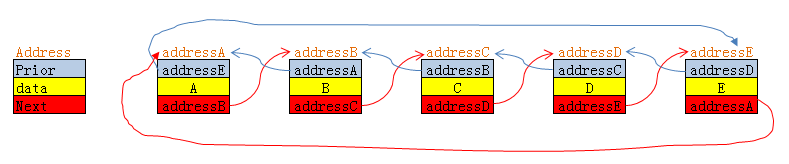
图中假设了A,B,C,D,E的地址分别为:addressA,addressB,addressC,addressD,addressE。
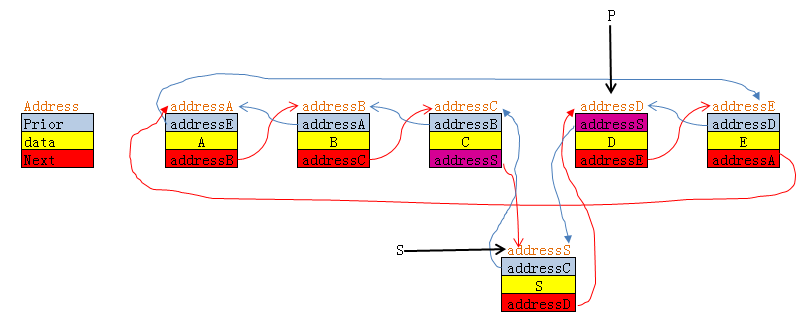
下面将分析链表的前插的例子:
双链表的前插,下面这是在节点"D"前插入一个新的节点"S"的代码和分析
以上这篇C++ 双链表的基本操作(详解)就是小编分享给大家的全部内容了,希望能给大家一个参考,也希望大家多多支持脚本之家。


