

Tensorflow内置了许多数据集,但是实际自己应用的时候还是需要使用自己的数据集,这里TensorFlow 官网也给介绍文档,官方文档。这里对整个流程做一个总结(以手势识别的数据集为例)。
1、 收集手势图片
方法多种多样了。我通过摄像头自己采集了一些手势图片。保存成如下形式,
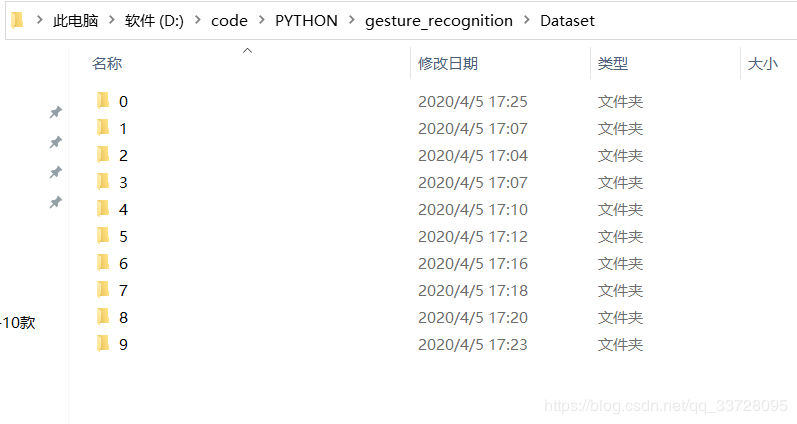
以同样的形式在建立一个测试集,当然也可以不弄,在程序里处理。
2、构建数据集
导入相关的包
import tensorflow as tf
from tensorflow import keras
from tensorflow.keras import datasets, layers, optimizers, Sequential, metrics
from tensorflow.python.framework.convert_to_constants import convert_variables_to_constants_v2
import os
import pathlib
import random
import matplotlib.pyplot as plt
读取文件
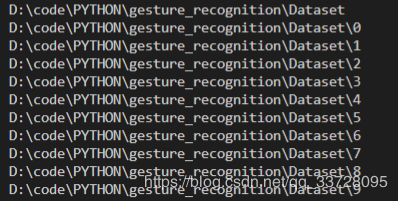
data_root = pathlib.Path('D:\code\PYTHON\gesture_recognition\Dataset')
print(data_root)
for item in data_root.iterdir():
 print(item)
读取图片路径到list中
all_image_paths = list(data_root.glob('*/*'))
all_image_paths = [str(path) for path in all_image_paths]
random.shuffle(all_image_paths)
image_count = len(all_image_paths)
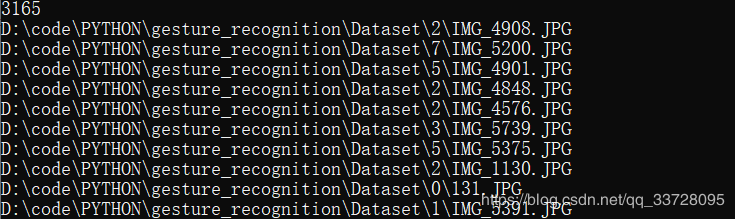
print(image_count) ##统计共有多少图片
for i in range(10):
 print(all_image_paths[i])
label_names = sorted(item.name for item in data_root.glob('*/') if item.is_dir())
print(label_names) #其实就是文件夹的名字
label_to_index = dict((name, index) for index, name in enumerate(label_names))
print(label_to_index)
all_image_labels = [label_to_index[pathlib.Path(path).parent.name]
     for path in all_image_paths]

print("First 10 labels indices: ", all_image_labels[:10])

预处理
def preprocess_image(image):
 image = tf.image.decode_jpeg(image, channels=3)
 image = tf.image.resize(image, [100, 100])
 image /= 255.0 # normalize to [0,1] range
 # image = tf.reshape(image,[100*100*3])
 return image

def load_and_preprocess_image(path,label):
 image = tf.io.read_file(path)
 return preprocess_image(image),label
构建一个 tf.data.Dataset
ds = tf.data.Dataset.from_tensor_slices((all_image_paths, all_image_labels))
train_data = ds.map(load_and_preprocess_image).batch(16)
同样的方式在制作一个测试集,就可以用于模型训练和测试了。


