

文件上传的方法主要目前有两个常用的,一个是SmartUpload,一个是Apache的Commons fileupload.
我们这里主要介绍下第二个的用法,首先要上传文件,注意几个问题:
1 form表单内,要添加空间<input type="file" name="myfile">
2 form表单的内容格式要定义成multipart/form-data格式
3 需要类库:1 commons-io.jar 2commons-fileupload-1.3.1.jar
接下来我们看下用法。
首先阅读Apache commons fileupload的官方文档可以发现下面几个常用的函数:
1 创建文件解析对象
2 进行文件解析后放在List中,因为这个类库支持多个文件上传,因此把结果会存在List中。
3 获取上传文件,进行分析(不是必须)
4 创建新对象,进行流拷贝
file1 = new File(this.getServletContext().getRealPath("attachment"),remoteFile.getName());
            file1.getParentFile().mkdirs();
            file1.createNewFile();

            InputStream ins = fileItem.getInputStream();
            OutputStream ous = new FileOutputStream(file1);

            try{
              byte[] buffer = new byte[1024];
              int len = 0;
              while((len = ins.read(buffer)) > -1)
                ous.write(buffer,0,len);
              out.println("以保存文件"+file1.getAbsolutePath()+"<br/>");
            }finally{
              ous.close();
              ins.close();
            }
这样我们就完成了文件的上传。
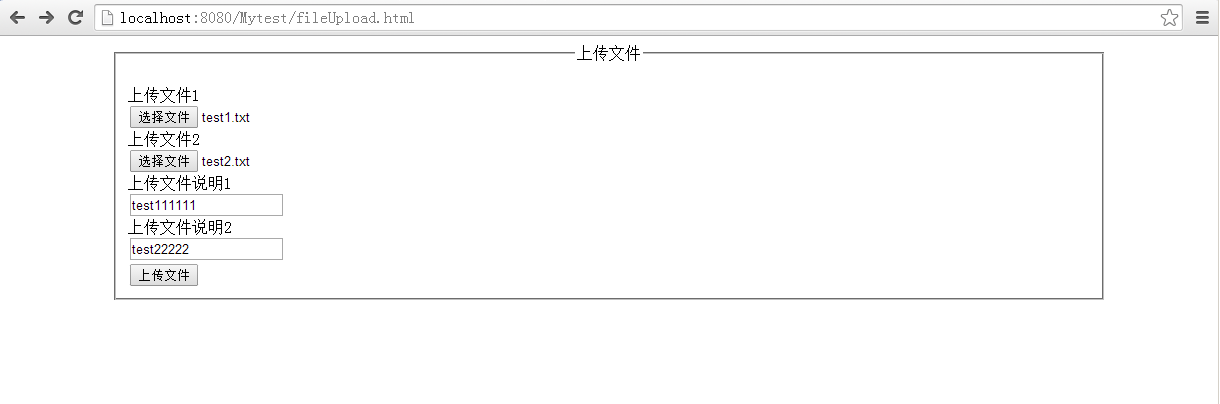
fileUpload.html
 <form action="servlet/UploadServlet" method="post" enctype="multipart/form-data">
    <div align="center">
      <fieldset style="width:80%">
        <legend>上传文件</legend><br/>
          <div align="left">上传文件1</div>
          <div align="left">
            <input type="file" name="file1"/>
          </div>
          <div align="left">上传文件2</div>
          <div align="left">
            <input type="file" name="file2"/>
          </div>
          <div>
            <div align='left'>上传文件说明1</div>
            <div align='left'><input type="text" name="description1"/></div>
          </div>
          <div>
            <div align='left'>上传文件说明2</div>
            <div align='left'><input type="text" name="description2"/></div>
          </div>
          <div>
            <div align='left'>
              <input type='submit' value="上传文件"/>
            </div>
          </div>
      </fieldset>
    </div>
  </form>
web.xml
<servlet>
  <servlet-name>UploadServlet</servlet-name>
  <servlet-class>com.test.hello.UploadServlet</servlet-class>
 </servlet>
<servlet-mapping>
  <servlet-name>UploadServlet</servlet-name>
  <url-pattern>/servlet/UploadServlet</url-pattern>
 </servlet-mapping>
UploadServlet.java
package com.test.hello;

import java.io.File;
import java.io.FileOutputStream;
import java.io.IOException;
import java.io.InputStream;
import java.io.OutputStream;
import java.io.PrintWriter;
import java.util.List;

import javax.servlet.ServletException;
import javax.servlet.http.HttpServlet;
import javax.servlet.http.HttpServletRequest;
import javax.servlet.http.HttpServletResponse;

import org.apache.commons.fileupload.DiskFileUpload;
import org.apache.commons.fileupload.FileItem;
import org.apache.commons.fileupload.FileUploadException;

public class UploadServlet extends HttpServlet {

  /**
   * Constructor of the object.
   */
  public UploadServlet() {
    super();
  }

  /**
   * Destruction of the servlet. <br>
   */
  public void destroy() {
    super.destroy(); // Just puts "destroy" string in log
    // Put your code here
  }

  /**
   * The doGet method of the servlet. <br>
   *
   * This method is called when a form has its tag value method equals to get.
   *
   * @param request the request send by the client to the server
   * @param response the response send by the server to the client
   * @throws ServletException if an error occurred
   * @throws IOException if an error occurred
   */
  public void doGet(HttpServletRequest request, HttpServletResponse response)
      throws ServletException, IOException {

    response.setCharacterEncoding("UTF-8");
    response.getWriter().println("请以POST方式上传文件");
  }

  /**
   * The doPost method of the servlet. <br>
   *
   * This method is called when a form has its tag value method equals to post.
   *
   * @param request the request send by the client to the server
   * @param response the response send by the server to the client
   * @throws ServletException if an error occurred
   * @throws IOException if an error occurred
   */
  @SuppressWarnings({ "unchecked", "deprecation" })
  public void doPost(HttpServletRequest request, HttpServletResponse response)
      throws ServletException, IOException {
    File file1 = null,file2=null;
    String description1 = null,description2 = null;
    response.setCharacterEncoding("UTF-8");
    request.setCharacterEncoding("UTF-8");
    response.setContentType("text/html");
    PrintWriter out = response.getWriter();

    DiskFileUpload diskFileUpload = new DiskFileUpload();
    try{
      List<FileItem> list = diskFileUpload.parseRequest(request);

      out.println("遍历所有的FileItem...<br/>");
      for(FileItem fileItem : list){
        if(fileItem.isFormField()){
          if("description1".equals(fileItem.getFieldName())){
            out.println("遍历到description1 ... <br/>");
            description1 = new String(fileItem.getString().getBytes(),"UTF-8");
          }
          if("description2".equals(fileItem.getFieldName())){
            out.println("遍历到description2 ... <br/>");
            description2 = new String(fileItem.getString().getBytes(),"UTF-8");
          }
        }else{
          if("file1".equals(fileItem.getFieldName())){
            File remoteFile = new File(new String(fileItem.getName().getBytes(),"UTF-8"));
            out.println("遍历到file1...<br/>");
            out.println("客户端文件位置:"+remoteFile.getAbsolutePath()+"<br/>");

            file1 = new File(this.getServletContext().getRealPath("attachment"),remoteFile.getName());
            file1.getParentFile().mkdirs();
            file1.createNewFile();

            InputStream ins = fileItem.getInputStream();
            OutputStream ous = new FileOutputStream(file1);

            try{
              byte[] buffer = new byte[1024];
              int len = 0;
              while((len = ins.read(buffer)) > -1)
                ous.write(buffer,0,len);
              out.println("以保存文件"+file1.getAbsolutePath()+"<br/>");
            }finally{
              ous.close();
              ins.close();
            }
          }
          if("file2".equals(fileItem.getFieldName())){
            File remoteFile = new File(new String(fileItem.getName().getBytes(),"UTF-8"));
            out.println("遍历到file2...<br/>");
            out.println("客户端文件位置:"+remoteFile.getAbsolutePath()+"<br/>");

            file2 = new File(this.getServletContext().getRealPath("attachment"),remoteFile.getName());
            file2.getParentFile().mkdirs();
            file2.createNewFile();

            InputStream ins = fileItem.getInputStream();
            OutputStream ous = new FileOutputStream(file2);

            try{
              byte[] buffer = new byte[1024];
              int len = 0;
              while((len = ins.read(buffer)) > -1)
                ous.write(buffer,0,len);
              out.println("以保存文件"+file2.getAbsolutePath()+"<br/>");
            }finally{
              ous.close();
              ins.close();
            }
          }
        }
        out.println("Request 解析完毕<br/><br/>");
      }
    }catch(FileUploadException e){}

    out.println("<!DOCTYPE HTML PUBLIC \"-//W3C//DTD HTML 4.01 Transitional//EN\">");
    out.println("<HTML>");
    out.println(" <HEAD><TITLE>A Servlet</TITLE></HEAD>");
    out.println(" <BODY>");

    if(file1 != null){
      out.println("<div>");
      out.println(" <div align='left'>file1;</div>");
      out.println(" <div align='left'><a href='"+request.getContextPath()+"/attachment/"+
          file1.getName()+"'target=_blank>"+file1.getName()+"</a>");
      out.println("</div>");
      out.println("</div>");
    }
    if(file2 != null){
      out.println("<div>");
      out.println(" <div align='left'>file2;</div>");
      out.println(" <div align='left'><a href='"+request.getContextPath()+"/attachment/"+
          file2.getName()+"'target=_blank>"+file2.getName()+"</a>");
      out.println("</div>");
      out.println("</div>");
    }
    out.println("<div>");
    out.println(" <div align='left'>description1:</div>");
    out.println(" <div align='left'>");
    out.println(description1);
    out.println("</div>");
    out.println("</div>");

    out.println("<div>");
    out.println(" <div align='left'>description2:</div>");
    out.println(" <div align='left'>");
    out.println(description2);
    out.println("</div>");
    out.println("</div>");

    out.println(" </BODY>");
    out.println("</HTML>");
    out.flush();
    out.close();
  }

  /**
   * Initialization of the servlet. <br>
   *
   * @throws ServletException if an error occurs
   */
  public void init() throws ServletException {
    // Put your code here
  }

}
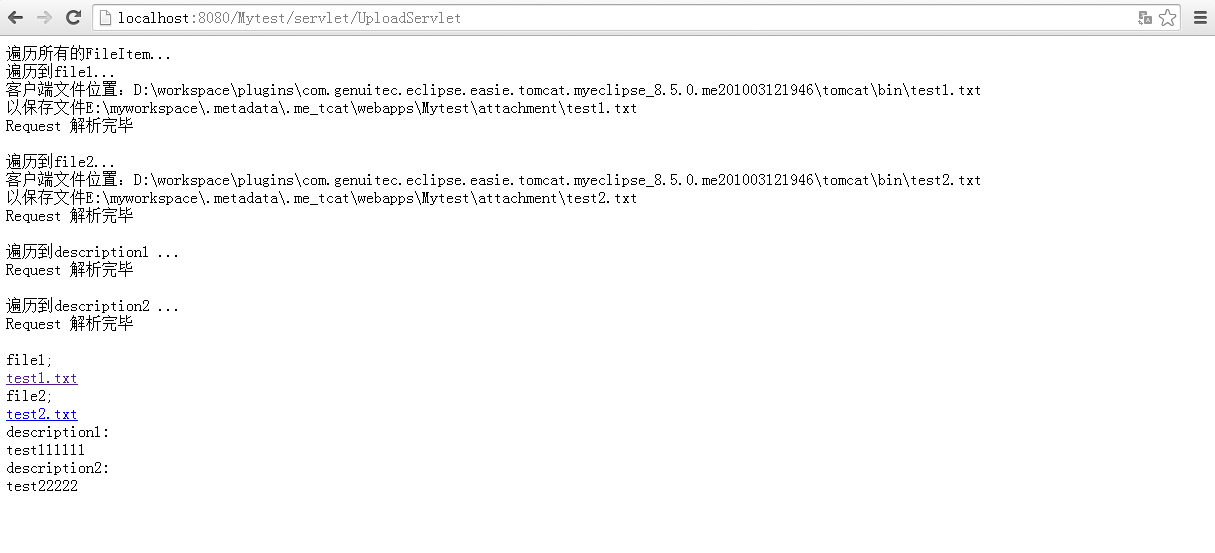
运行示例
以上就是本文的全部内容,希望对大家的学习有所帮助,也希望大家多多支持脚本之家。


