

上一篇简单介绍了SurfaceView的基本使用,这次就介绍SurfaceView与多线程的混搭。SurfaceView与多线程混搭,是为了防止动画闪烁而实现的一种多线程应用。android的多线程用法与JAVA的多线程用法完全一样,本文不做多线程方面的介绍了。直接讲解SurfaceView与多线程的混合使用,即开一条线程专门读取图片,另外一条线程专门绘图。
本文程序运行截图如下,左边是开单个线程读取并绘图,右边是开两个线程,一个专门读取图片,一个专门绘图:
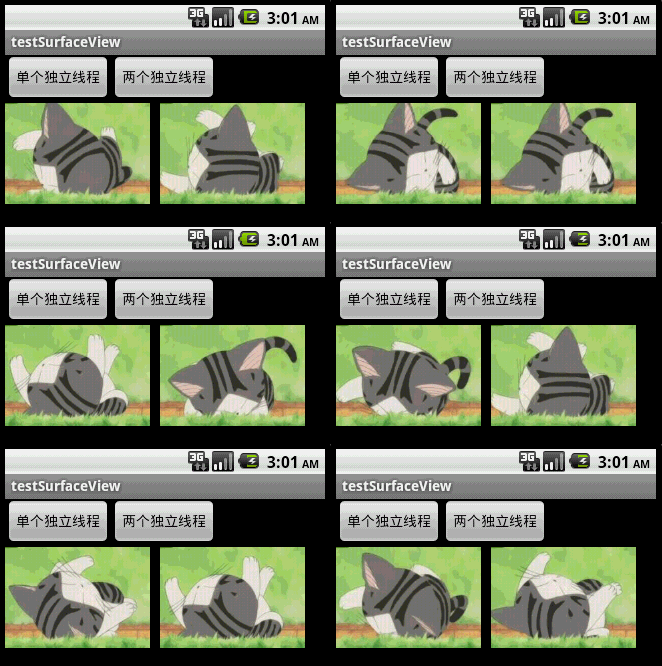
对比一下,右边动画的帧速明显比左边的快,左右两者都没使用Thread.sleep()。为什么要开两个线程一个读一个画,而不去开两个线程像左边那样都“边读边画”呢?因为SurfaceView每次绘图都会锁定Canvas,也就是说同一片区域这次没画完下次就不能画,因此要提高动画播放的效率,就得开一条线程专门画图,开另外一条线程做预处理的工作。
main.xml的源码:
<linearlayout xmlns:android="http://schemas.android.com/apk/res/android"
    android:layout_width="fill_parent" android:layout_height="fill_parent"
    android:orientation="vertical">

    <linearlayout android:id="@+id/LinearLayout01"
        android:layout_width="wrap_content" android:layout_height="wrap_content">
        <button android:id="@+id/Button01" android:layout_width="wrap_content"
            android:layout_height="wrap_content" android:text="单个独立线程">
        <button android:id="@+id/Button02" android:layout_width="wrap_content"
            android:layout_height="wrap_content" android:text="两个独立线程">

    <surfaceview android:id="@+id/SurfaceView01"
        android:layout_width="fill_parent" android:layout_height="fill_parent">
本文程序的源码:
package com.testSurfaceView;

import java.lang.reflect.Field;
import java.util.ArrayList;
import android.app.Activity;
import android.graphics.Bitmap;
import android.graphics.BitmapFactory;
import android.graphics.Canvas;
import android.graphics.Paint;
import android.graphics.Rect;
import android.os.Bundle;
import android.util.Log;
import android.view.SurfaceHolder;
import android.view.SurfaceView;
import android.view.View;
import android.widget.Button;

public class testSurfaceView extends Activity {
    /** Called when the activity is first created. */
    Button btnSingleThread, btnDoubleThread;
    SurfaceView sfv;
    SurfaceHolder sfh;
    ArrayList imgList = new ArrayList();
    int imgWidth, imgHeight;
    Bitmap bitmap;//独立线程读取,独立线程绘图

    @Override
    public void onCreate(Bundle savedInstanceState) {
        super.onCreate(savedInstanceState);
        setContentView(R.layout.main);

        btnSingleThread = (Button) this.findViewById(R.id.Button01);
        btnDoubleThread = (Button) this.findViewById(R.id.Button02);
        btnSingleThread.setOnClickListener(new ClickEvent());
        btnDoubleThread.setOnClickListener(new ClickEvent());
        sfv = (SurfaceView) this.findViewById(R.id.SurfaceView01);
        sfh = sfv.getHolder();
        sfh.addCallback(new MyCallBack());// 自动运行surfaceCreated以及surfaceChanged
    }

    class ClickEvent implements View.OnClickListener {

        @Override
        public void onClick(View v) {

            if (v == btnSingleThread) {
                new Load_DrawImage(0, 0).start();//开一条线程读取并绘图
            } else if (v == btnDoubleThread) {
                new LoadImage().start();//开一条线程读取
                new DrawImage(imgWidth + 10, 0).start();//开一条线程绘图
            }

        }

    }

    class MyCallBack implements SurfaceHolder.Callback {

        @Override
        public void surfaceChanged(SurfaceHolder holder, int format, int width,
                int height) {
            Log.i("Surface:", "Change");

        }

        @Override
        public void surfaceCreated(SurfaceHolder holder) {
            Log.i("Surface:", "Create");

            // 用反射机制来获取资源中的图片ID和尺寸
            Field[] fields = R.drawable.class.getDeclaredFields();
            for (Field field : fields) {
                if (!"icon".equals(field.getName()))// 除了icon之外的图片
                {
                    int index = 0;
                    try {
                        index = field.getInt(R.drawable.class);
                    } catch (IllegalArgumentException e) {
                        // TODO Auto-generated catch block
                        e.printStackTrace();
                    } catch (IllegalAccessException e) {
                        // TODO Auto-generated catch block
                        e.printStackTrace();
                    }
                    // 保存图片ID
                    imgList.add(index);
                }
            }
            // 取得图像大小
            Bitmap bmImg = BitmapFactory.decodeResource(getResources(),
                    imgList.get(0));
            imgWidth = bmImg.getWidth();
            imgHeight = bmImg.getHeight();
        }

        @Override
        public void surfaceDestroyed(SurfaceHolder holder) {
            Log.i("Surface:", "Destroy");

        }

    }

    /*
     * 读取并显示图片的线程
     */
    class Load_DrawImage extends Thread {
        int x, y;
        int imgIndex = 0;

        public Load_DrawImage(int x, int y) {
            this.x = x;
            this.y = y;
        }

        public void run() {
            while (true) {
                Canvas c = sfh.lockCanvas(new Rect(this.x, this.y, this.x
                        + imgWidth, this.y + imgHeight));
                Bitmap bmImg = BitmapFactory.decodeResource(getResources(),
                        imgList.get(imgIndex));
                c.drawBitmap(bmImg, this.x, this.y, new Paint());
                imgIndex++;
                if (imgIndex == imgList.size())
                    imgIndex = 0;

                sfh.unlockCanvasAndPost(c);// 更新屏幕显示内容
            }
        }
    };

    /*
     * 只负责绘图的线程
     */
    class DrawImage extends Thread {
        int x, y;

        public DrawImage(int x, int y) {
            this.x = x;
            this.y = y;
        }

        public void run() {
            while (true) {
                if (bitmap != null) {//如果图像有效
                    Canvas c = sfh.lockCanvas(new Rect(this.x, this.y, this.x
                            + imgWidth, this.y + imgHeight));

                    c.drawBitmap(bitmap, this.x, this.y, new Paint());

                    sfh.unlockCanvasAndPost(c);// 更新屏幕显示内容
                }
            }
        }
    };

    /*
     * 只负责读取图片的线程
     */
    class LoadImage extends Thread {
        int imgIndex = 0;

        public void run() {
            while (true) {
                bitmap = BitmapFactory.decodeResource(getResources(),
                        imgList.get(imgIndex));
                imgIndex++;
                if (imgIndex == imgList.size())//如果到尽头则重新读取
                    imgIndex = 0;
            }
        }
    };
}
以上就是本文的全部内容,希望对大家学习Android软件编程有所帮助。


